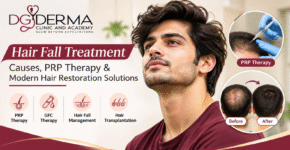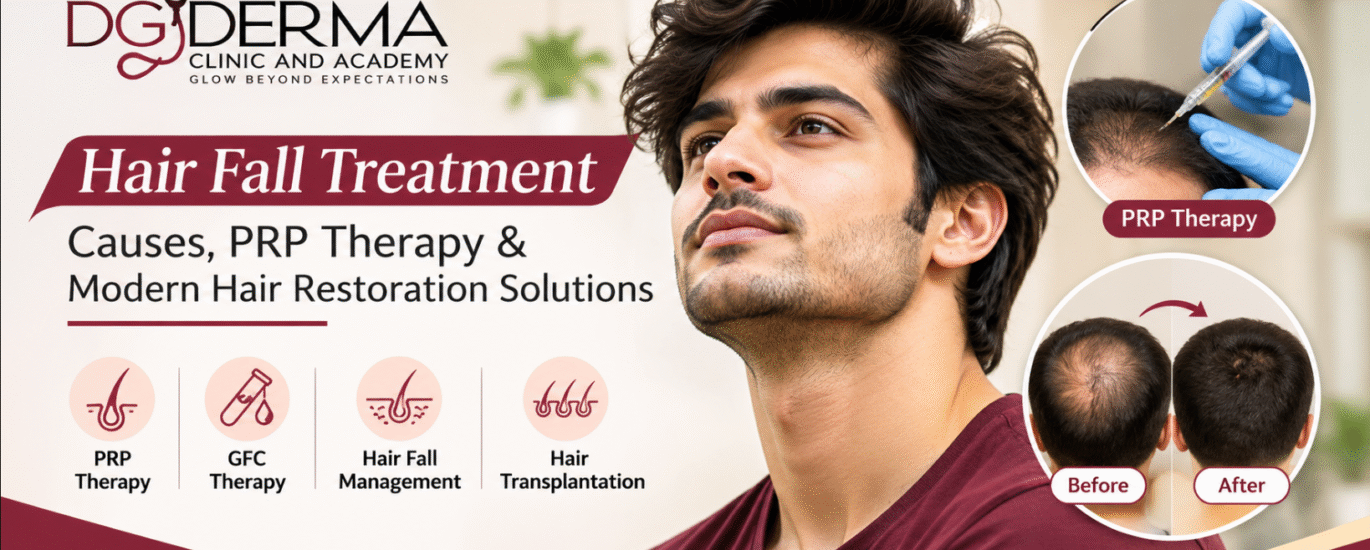
Hair Fall Treatment: Causes, PRP Therapy & Modern Hair Restoration Solutions
Hair fall is one of the most common hair-related concerns affecting both men and women. While losing some hair every day is a normal part of the hair growth cycle, excessive shedding, visible thinning and a receding hairline may indicate an underlying hair or scalp condition.
For many individuals, hair loss can gradually affect appearance, confidence and overall well-being. The good news is that modern dermatology offers several approaches to managing hair fall and improving hair density, depending on its underlying cause.
Today, treatment options such as PRP (Platelet-Rich Plasma) Therapy, GFC (Growth Factor Concentrate) Therapy, medical hair loss management and hair transplantation are used to address different hair restoration concerns.
If you are searching for an effective hair fall treatment, understanding why your hair is falling and which treatment options may be suitable is the first step.
At DGDERMA Clinic & Academy, the approach to hair restoration focuses on understanding individual hair and scalp concerns and exploring personalized treatment options.
What Is Hair Fall and When Should You Be Concerned?
Hair fall refers to the shedding of hair from the scalp. It is normal to lose approximately 50–100 hairs per day as part of the natural hair growth cycle.
However, persistent excessive shedding or progressive hair thinning may require professional evaluation.
Some common signs of concerning hair loss include:
- Noticeably increased hair shedding.
- Gradual thinning around the crown.
- Receding hairline.
- Widening of the hair parting.
- Reduced overall hair density.
- Visible scalp through thinning areas.
- Sudden development of bald patches.
Not every type of hair fall leads to permanent baldness. Some conditions are temporary and may improve once the underlying cause is addressed.
Common Causes of Hair Fall
Understanding the cause of hair loss is essential before selecting a treatment.
1. Genetic Hair Loss
Androgenetic alopecia, commonly known as male or female pattern hair loss, is one of the most common causes of progressive hair thinning.
It is associated with genetic factors and sensitivity of hair follicles to androgen hormones.
In men, it may appear as a receding hairline or thinning around the crown.
In women, it commonly appears as gradual thinning across the top of the scalp or widening of the central hair parting.
2. Hormonal Changes
Hormonal fluctuations can affect the hair growth cycle.
Conditions such as thyroid disorders, polycystic ovary syndrome (PCOS) and certain hormonal changes may contribute to increased hair shedding or thinning.
Women may also experience temporary hair shedding after pregnancy due to changes in hormone levels.
3. Nutritional Deficiencies
Hair follicles require adequate nutrients to support healthy growth.
Deficiencies involving iron, protein, vitamin B12, vitamin D and other nutrients may contribute to hair loss in certain individuals.
However, taking supplements without identifying an actual deficiency is not always helpful.
4. Stress and Lifestyle Factors
Physical or emotional stress may trigger a condition called telogen effluvium.
In this condition, more hair follicles than usual enter the resting phase, leading to increased shedding.
Hair fall may become noticeable a few months after a stressful event, illness, surgery or major physical change.
5. Scalp Conditions
Scalp problems such as seborrheic dermatitis, psoriasis, fungal infections and inflammatory conditions may contribute to hair shedding.
Persistent itching, redness, flaking and irritation should be evaluated by a qualified professional.
6. Improper Hair Care
Excessive heat styling, chemical treatments, harsh hair handling and tight hairstyles may damage the hair shaft or contribute to traction-related hair loss.
Adopting healthier hair care habits can help reduce preventable hair damage.
Different Types of Hair Loss
Identifying the pattern of hair loss helps determine the appropriate management approach.
Androgenetic Alopecia
This is hereditary pattern hair loss affecting both men and women. It usually develops gradually and may require long-term management.
Telogen Effluvium
This condition involves increased shedding when an unusually large number of hair follicles enter the resting phase.
Common triggers include illness, stress, surgery, nutritional deficiencies and hormonal changes.
Alopecia Areata
Alopecia areata is an autoimmune condition that causes hair loss in round or oval patches. It may affect the scalp, beard and other areas of the body.
Traction Alopecia
Traction alopecia develops when repeated pulling or tension damages hair follicles. Tight hairstyles and prolonged mechanical stress can contribute to this condition.
Different forms of hair loss require different treatments. Therefore, identifying the underlying condition is more important than choosing a popular hair restoration procedure.
What Is PRP Hair Treatment?
PRP stands for Platelet-Rich Plasma. It is a minimally invasive procedure that uses a concentrated portion of a patient’s own blood.
Platelets contain growth factors and other biological components involved in the body’s natural healing processes.
PRP therapy for hair loss involves preparing platelet-rich plasma from a blood sample and injecting it into selected areas of the scalp.
The procedure is used as a hair restoration option, particularly for selected patients with pattern hair loss.
How Does PRP Therapy Work?
PRP hair treatment generally involves the following steps:
Step 1: Blood Collection
A small amount of blood is collected from the patient’s arm using a sterile procedure.
Step 2: Centrifugation
The collected blood is processed in a centrifuge to separate its components and obtain platelet-rich plasma.
Step 3: Scalp Preparation
The treatment area is cleaned and prepared. Appropriate measures may be used to improve patient comfort.
Step 4: PRP Injection
The prepared platelet-rich plasma is injected into selected areas of the scalp using fine needles.
Step 5: Post-Treatment Guidance
The patient receives instructions regarding scalp care, activities and follow-up appointments.
Potential Benefits of PRP Hair Therapy
Depending on the diagnosis and individual response, PRP may help:
- Improve hair density in selected patients.
- Reduce excessive hair shedding.
- Support hair follicle activity.
- Improve certain measures of hair growth.
- Complement other hair loss treatments.
Scientific studies have reported improvements in hair density with PRP in some patients with androgenetic alopecia. However, the quality of evidence and treatment protocols vary, and results are not guaranteed.
PRP should be considered only after a professional assessment of the underlying hair loss condition.
What Is GFC Hair Treatment?
GFC stands for Growth Factor Concentrate. It is a regenerative hair treatment approach involving the preparation of growth factor-rich material derived from a patient’s own blood.
GFC and PRP are related but are not identical procedures. Their preparation methods and biological composition can differ depending on the protocol used.
The treatment aims to deliver selected growth factors to the scalp to support hair restoration.
Potential Benefits of GFC Therapy
Depending on the treatment protocol and individual condition, GFC may be considered to:
- Support hair follicle activity.
- Address selected hair thinning concerns.
- Complement an individualized hair restoration plan.
- Provide a minimally invasive treatment option.
It is important to note that claims that GFC is universally more effective than PRP are not established by strong comparative clinical evidence. Patients should discuss the evidence, expected outcomes and limitations with their treating professional.
PRP vs GFC Hair Treatment: What Is the Difference?
Both PRP and GFC use a patient’s own blood as the starting material, but their preparation techniques differ.
| Comparison | PRP Therapy | GFC Therapy |
|---|---|---|
| Full Form | Platelet-Rich Plasma | Growth Factor Concentrate |
| Source | Patient’s blood | Patient’s blood |
| Preparation | Platelet separation and concentration | Growth factor-focused preparation |
| Application | Scalp injections | Scalp application through injections |
| Evidence | Clinical studies available, with limitations | More limited comparative evidence |
| Suitability | Depends on hair loss diagnosis | Depends on individual assessment |
Neither treatment should be selected solely on the basis of marketing claims. The most appropriate option depends on the patient’s hair loss pattern, scalp condition, medical history and treatment goals.
Hair Transplantation: An Option for Advanced Hair Loss
Hair transplantation is a surgical hair restoration procedure used for selected individuals experiencing permanent hair loss.
In common FUE (Follicular Unit Extraction) procedures, individual follicular units are extracted from a donor area and implanted into areas affected by hair loss.
Potential Benefits of Hair Transplantation
- Restoration of hair in selected bald areas.
- Natural-looking hairline planning.
- Use of the patient’s own hair follicles.
- Long-term improvement when appropriately performed.
- A surgical option for suitable candidates with established hair loss.
Not everyone is a suitable candidate for hair transplantation. Donor hair availability, the pattern of hair loss, age, medical history and long-term progression must be considered.
A transplant also does not stop ongoing hair loss in untreated areas. Long-term medical management may still be recommended.
How to Choose the Right Hair Fall Treatment?
There is no universal hair loss treatment that works for everyone.
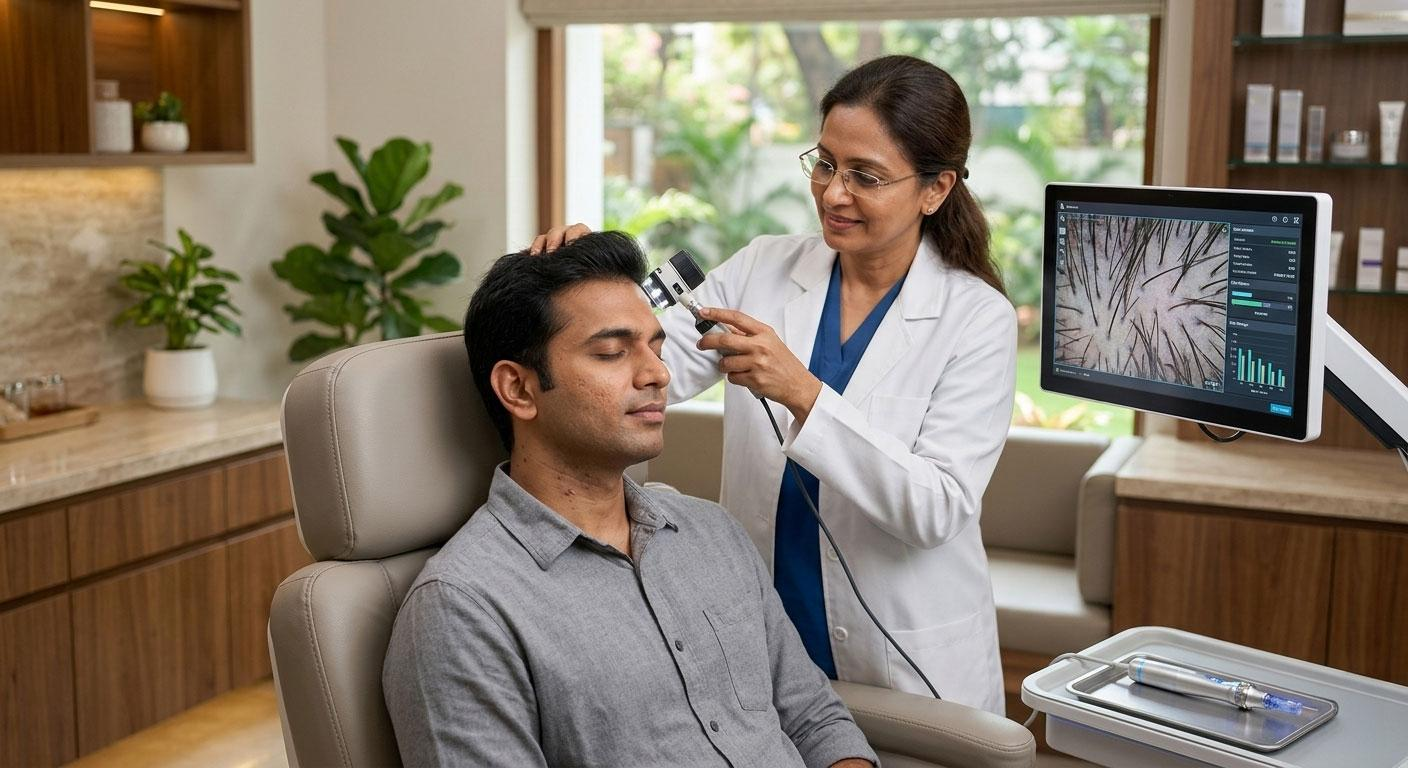
A personalized evaluation may involve:
- Reviewing the history and duration of hair fall.
- Examining the scalp and hair density.
- Identifying the pattern of hair loss.
- Reviewing family history and relevant medical conditions.
- Considering blood tests when nutritional, hormonal or other medical causes are suspected.
- Discussing suitable treatment options and realistic expectations.
Depending on the diagnosis, a dermatologist may recommend medical management, PRP, GFC, scalp treatment, hair transplantation or a combination of approaches.
Some conditions may improve without advanced procedures once the underlying trigger is addressed.
How to Maintain Healthy Hair and Reduce Hair Fall?
Professional treatment can be supported by healthy daily habits.
1. Maintain a Balanced Diet
Include adequate protein, iron-rich foods, vegetables, fruits and other nutrient-rich foods in your diet.
If a deficiency is suspected, seek appropriate medical evaluation rather than taking supplements without guidance.
2. Avoid Excessive Heat Styling
Frequent use of high-temperature styling tools can damage the hair shaft and increase breakage.
Use heat protection products when necessary and avoid excessive styling.
3. Follow a Suitable Hair Care Routine
Choose hair care products based on your scalp and hair type. Avoid excessive chemical treatments and aggressive brushing.
4. Manage Stress
Maintain healthy sleep habits, regular physical activity and practical stress-management routines.
5. Treat Scalp Problems Early
Persistent dandruff, itching, redness or scalp inflammation should not be ignored.
6. Seek Professional Advice for Persistent Hair Loss
If hair fall continues or hair density is decreasing, consult a qualified professional to identify the underlying cause.
Why Consider DGDERMA for Hair Restoration?
DGDERMA Clinic & Academy, founded by Dr. Debanjoy Goswami, offers professional consultation and personalized treatment approaches for skin, hair and aesthetic concerns.
Its hair treatment services include options such as:
- PRP Therapy.
- GFC Therapy.
- Hair Transplantation.
- Hair Fall Management.
- Hair Restoration Guidance.
- Scalp and Hair Care Assessment.
The most appropriate treatment depends on the patient’s individual condition and professional evaluation.
Rather than choosing a procedure based only on advertisements or social media recommendations, patients should understand the available options, clinical evidence, possible risks and expected outcomes before beginning treatment.
DGDERMA Clinic & Academy
Location: 34/A, Bancharam Mitra Lane, Konnagar, Hooghly, West Bengal – 712235
Phone: +91 90380 58885
Website: https://dgderma.com/
Frequently Asked Questions About Hair Fall Treatment
1. What is the best treatment for hair fall?
The best treatment depends on the underlying cause. Options may include medical management, PRP therapy, GFC therapy, scalp treatments and hair transplantation for suitable candidates.
2. Does PRP treatment help with hair growth?
Clinical studies suggest PRP may improve hair density in some individuals with androgenetic alopecia. However, outcomes vary, and further standardized research is needed.
3. How many PRP sessions are required for hair treatment?
The number and frequency of sessions depend on the treatment protocol, diagnosis and individual response. A dermatologist should establish the schedule after evaluation.
4. Is PRP hair treatment permanent?
PRP is not considered a permanent cure for genetic hair loss. Maintenance sessions and other long-term hair loss management options may be necessary.
5. What is the difference between PRP and GFC hair treatment?
PRP uses platelet-rich plasma, while GFC uses a growth factor-focused preparation. Both are derived from the patient’s blood, but their preparation methods differ.
6. Can hair fall be caused by vitamin deficiencies?
Yes. Certain nutritional deficiencies, including iron deficiency, may contribute to hair shedding. Testing can help identify whether a deficiency is present.
7. Can women undergo PRP hair treatment?
PRP may be considered for selected women experiencing certain types of hair thinning. A professional assessment is necessary to determine suitability.
8. Is hair transplantation suitable for everyone?
No. Suitability depends on factors such as donor hair availability, the cause and stage of hair loss, medical history and individual expectations.
9. When should I consult a dermatologist for hair fall?
Consider professional consultation if you experience persistent excessive shedding, progressive thinning, a receding hairline, bald patches or scalp irritation.
10. Where can I get professional hair treatment?
DGDERMA Clinic & Academy offers consultation and hair restoration options, including PRP, GFC and hair transplantation. Contact the clinic to discuss your individual requirements.
Final Thoughts
Hair fall can develop for several reasons, and choosing the right treatment requires understanding the underlying cause.
Modern dermatology provides several options for managing hair loss, including PRP therapy, GFC therapy, medical hair loss management and hair transplantation.
However, no single treatment is suitable for everyone. A proper diagnosis, realistic expectations and a personalized treatment plan are essential for making informed decisions.
If you are experiencing persistent hair fall or visible thinning, consider seeking professional guidance rather than relying on random products or unverified remedies.
Start your hair restoration journey with a professional consultation at DGDERMA Clinic & Academy.
Visit https://dgderma.com/ or call +91 90380 58885 to enquire about an appointment.
Medical Disclaimer: This article is for educational purposes only and does not replace professional medical advice, diagnosis or treatment. PRP and GFC treatment outcomes vary, and all procedures should be considered after consultation with a qualified medical professional.