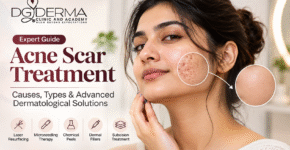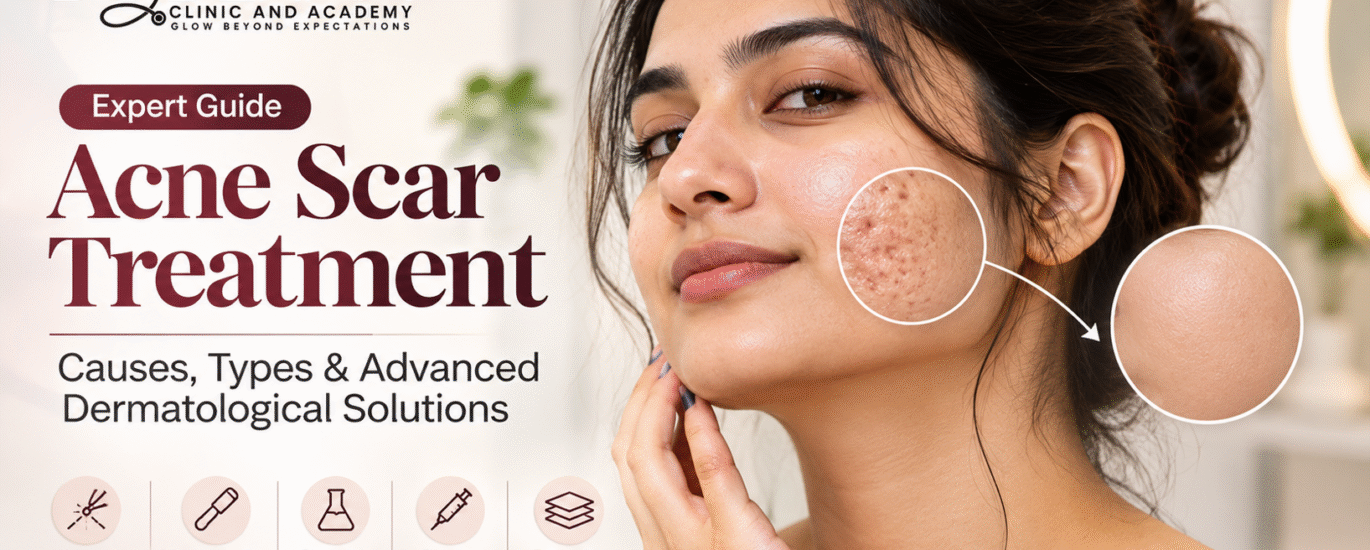
Acne Scar Treatment: Causes, Types & Advanced Dermatological Solutions
Acne is one of the most common skin concerns affecting teenagers and adults. While active acne breakouts can gradually disappear, the marks and scars left behind may continue to affect skin texture and appearance. For many individuals, acne scars become a long-term concern that cannot be addressed effectively through regular skincare products alone.
Fortunately, modern dermatology offers several advanced approaches for improving the appearance of acne scars. Depending on the type, depth and severity of scarring, treatments such as laser resurfacing, microneedling, chemical peels and other dermatological procedures may help achieve smoother-looking skin.
If you are considering acne scar treatment, understanding the causes, different scar types and available treatment options is an important first step.
At DGDERMA Clinic & Academy, the focus is on personalized dermatological care, advanced skincare solutions and professional consultation to help individuals make informed decisions about their skin health.
What Are Acne Scars?
Acne scars are changes in skin texture that develop after inflammatory acne lesions heal. They commonly appear after deep pimples, nodules or cystic acne.
When the skin experiences inflammation, its natural healing process involves collagen production. Collagen is an important structural protein that helps maintain skin strength and firmness.
However, if the body produces too little collagen during healing, depressed or sunken scars may develop. If excessive collagen is produced, raised scars can form.
Acne scars may appear on the cheeks, forehead, temples, jawline, chin, chest and back.
It is important to understand that acne scars are different from post-acne dark spots. Dark spots are usually related to post-inflammatory hyperpigmentation, whereas true acne scars involve changes in skin texture.
What Causes Acne Scars?
Several factors can increase the likelihood of developing acne scars.
1. Severe Inflammatory Acne
Deep and painful acne lesions, particularly nodules and cysts, can damage deeper layers of the skin. This increases the possibility of permanent textural changes during the healing process.
2. Picking or Squeezing Pimples
Popping, scratching or squeezing pimples can increase inflammation and damage surrounding skin tissue. This may increase the risk of scarring and post-inflammatory pigmentation.
3. Delayed Acne Treatment
Leaving inflammatory acne untreated for a long time may allow repeated breakouts and ongoing inflammation to damage the skin.
Early acne management is important for reducing the risk of future scarring.
4. Genetic Factors
Some individuals may have a greater tendency to develop acne scars because of their family history and individual skin-healing characteristics.
5. Excessive Skin Inflammation
Prolonged inflammation can interfere with normal skin repair and contribute to changes in collagen production.
Different Types of Acne Scars
Identifying the type of acne scar is essential because different scars require different treatment approaches.
1. Ice Pick Scars
Ice pick scars are narrow, deep depressions that extend into the deeper layers of the skin. They often appear as small holes and are commonly found on the cheeks.
These scars can be challenging to treat because of their depth.
2. Boxcar Scars
Boxcar scars are wider depressions with clearly defined edges. They may appear round or oval and can vary in depth.
They are frequently observed on the cheeks and temples.
3. Rolling Scars
Rolling scars create an uneven, wave-like appearance on the skin. They develop when fibrous bands beneath the skin pull the surface downward.
The skin may appear uneven, especially under direct lighting.
4. Hypertrophic Scars
Hypertrophic scars are raised scars caused by excessive collagen production during healing.
Unlike depressed scars, these scars extend above the surrounding skin but generally remain within the boundaries of the original acne lesion.
5. Keloid Scars
Keloids are raised scars that extend beyond the original area of skin injury. They may continue growing over time and sometimes cause itching or discomfort.
A dermatologist can distinguish keloids from other raised scars and recommend suitable treatment.
Best Acne Scar Treatment Options
There is no single treatment that works equally well for every type of acne scar. A dermatologist generally considers scar depth, skin type, pigmentation, active acne, medical history and individual treatment goals before recommending a procedure.
Some commonly used dermatological treatment options include:
1. Laser Treatment for Acne Scars
Laser resurfacing is one of the established procedural approaches used to improve certain types of acne scars.
Depending on the technology and treatment method, lasers may target damaged skin tissue, improve surface texture and stimulate collagen remodelling.
Fractional laser treatments are designed to create controlled areas of thermal injury while leaving surrounding tissue relatively unaffected.
Potential benefits include:
- Improvement in uneven skin texture.
- Reduction in the appearance of selected depressed scars.
- Stimulation of collagen remodelling.
- Improvement in certain associated skin irregularities.
The appropriate laser technology depends on the patient’s skin tone, scar type and risk of post-inflammatory pigmentation.
2. Microneedling Treatment
Microneedling is a dermatological procedure that uses fine sterile needles to create controlled micro-injuries in the skin.
This process stimulates the body’s natural wound-healing response and collagen production.
Microneedling may help improve:
- Mild to moderate depressed acne scars.
- Uneven skin texture.
- Certain superficial skin irregularities.
Multiple sessions may be required, depending on the severity of scarring and the individual’s response to treatment.
3. Chemical Peels
Chemical peels involve applying selected chemical solutions to the skin to promote controlled exfoliation.
Depending on the formulation and strength, chemical peels may improve superficial skin irregularities, uneven pigmentation and certain mild acne-related concerns.
Some dermatological peel techniques, including TCA CROSS, may be considered for selected ice pick scars.
Chemical peels must be selected and performed carefully, particularly for individuals with darker skin tones who may have an increased risk of pigmentation changes.
4. Subcision
Subcision is a minor dermatological procedure used for selected depressed acne scars, particularly rolling scars.
During the procedure, a specialised needle is inserted beneath the scar to release fibrous bands that pull the skin downward.
By releasing these attachments, the depressed area may become less noticeable.
Subcision may sometimes be combined with other procedures to improve overall results.
5. Dermal Fillers
Dermal fillers may be considered for selected depressed acne scars where loss of underlying volume contributes to the uneven appearance.
These injectable treatments help add volume beneath the affected area.
Results are generally temporary and depend on the filler material used.
6. Combination Acne Scar Treatment
In many cases, a combination approach may be more suitable than relying on a single procedure.
For example, a dermatologist may recommend combining subcision with laser resurfacing or microneedling, depending on the type of scarring.
The objective is to address different aspects of acne scarring, including skin texture, depth and collagen-related changes.
How to Choose the Right Acne Scar Treatment?
Choosing the right acne scar treatment requires professional skin assessment.
Before recommending a procedure, a dermatologist may evaluate:
- Type and depth of acne scars.
- Skin tone and sensitivity.
- Presence of active acne.
- History of pigmentation or keloid formation.
- Previous skincare products and treatments.
- Expected recovery time and treatment budget.
This assessment helps determine which procedures are appropriate and whether multiple treatments are necessary.
It is generally advisable to control active acne before beginning procedures specifically designed for acne scars. This helps reduce the possibility of developing additional scars.
Can Acne Scars Be Removed Permanently?
One of the most common questions people ask is whether acne scars can be removed permanently.
The answer depends on the type, depth and severity of the scars.
Some superficial scars and associated pigmentation may improve considerably with appropriate treatment. Deeper scars can be more challenging and may require multiple procedures.
It is important to maintain realistic expectations. Dermatological treatments can often make acne scars less noticeable, but complete removal cannot be guaranteed.
Results also vary from person to person.
How to Prevent New Acne Scars?
Although not every acne scar can be prevented, certain habits can reduce the risk of developing new scars.
- Treat acne early: Seek appropriate treatment when persistent or inflammatory acne develops.
- Avoid popping pimples: Picking and squeezing can increase inflammation and tissue damage.
- Use sunscreen: Daily broad-spectrum sun protection helps reduce pigmentation changes and protects healing skin.
- Follow a dermatologist-recommended routine: Avoid experimenting with multiple strong skincare products.
- Do not ignore recurring acne: Repeated inflammatory breakouts may increase the risk of additional scarring.
- Follow post-treatment instructions: Proper aftercare is important following professional procedures.
Why Consider DGDERMA for Professional Skin Care?
Choosing a dermatology clinic is an important decision, particularly when considering procedures for acne scars.
DGDERMA Clinic & Academy, founded by Dr. Debanjoy Goswami, focuses on personalized skin care, advanced aesthetic solutions and professional dermatological education.
The clinic emphasizes individual consultations, treatment planning and patient-focused care.
Individuals considering acne scar treatment can contact DGDERMA to discuss their skin concerns and understand which professional treatment options may be appropriate for their condition.
Clinic: DGDERMA Clinic & Academy
Location: 34/A, Bancharam Mitra Lane, Konnagar, Hooghly, West Bengal – 712235
Phone: +91 90380 58885
Website: https://dgderma.com/
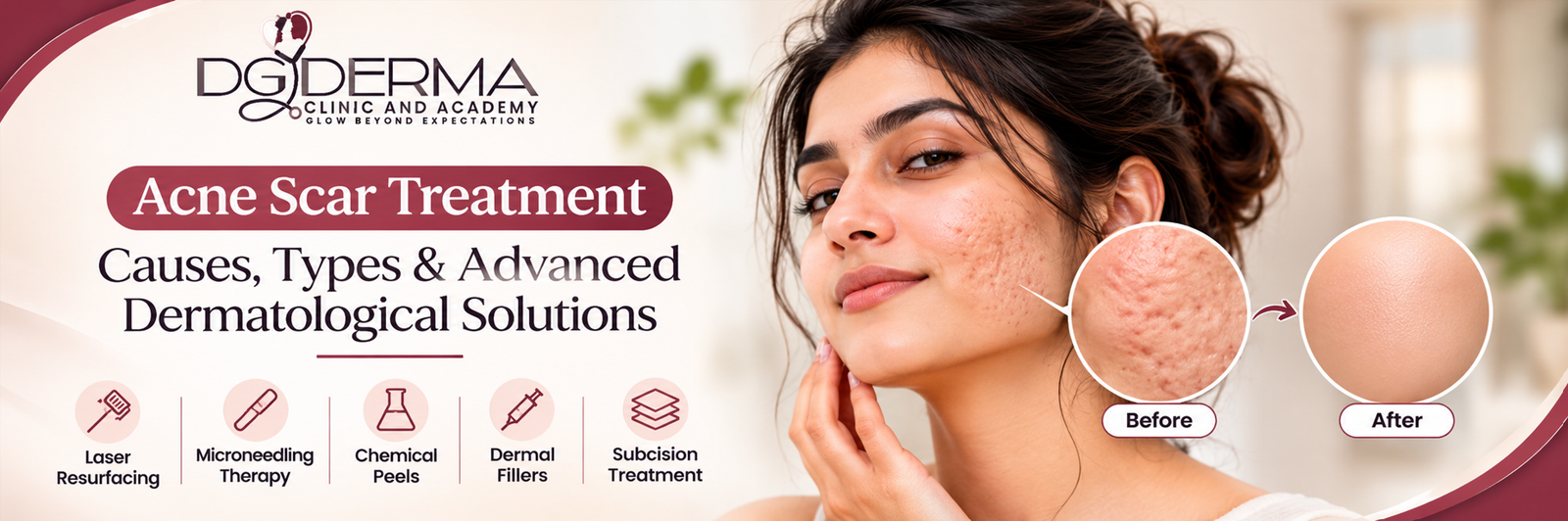
Frequently Asked Questions (FAQs)
1. What is the best treatment for acne scars?
The best treatment depends on the type and severity of acne scars. Laser resurfacing, microneedling, chemical peels, subcision and other procedures may be considered after a dermatologist evaluates the skin.
2. Can deep acne scars be treated?
Yes, several dermatological procedures can improve the appearance of deep acne scars. However, deeper scars may require specialised or combination treatments, and complete removal cannot be guaranteed.
3. How many sessions are required for acne scar treatment?
The number of sessions varies depending on the scar type, treatment method and individual skin response. Some procedures require multiple sessions over several weeks or months.
4. Is laser treatment effective for acne scars?
Laser resurfacing can improve the appearance of selected acne scars by promoting skin remodelling and collagen production. Suitability depends on skin type, scar characteristics and the laser technology used.
5. Does microneedling help with acne scars?
Microneedling may help improve certain depressed acne scars by stimulating collagen production. It is often performed as part of a personalised treatment plan.
6. Are acne scars permanent?
Acne scars can persist for years and rarely disappear completely without treatment. However, appropriate dermatological procedures can make many scars less noticeable.
7. Can acne scars be treated at home?
Home skincare can help manage active acne and protect the skin, but established deep acne scars generally require professional assessment and may need in-clinic procedures.
8. When should I consult a dermatologist for acne scars?
Consider consulting a dermatologist if you have persistent acne, deep scars, raised scars, recurring breakouts or skin texture changes that are affecting your confidence.
Final Thoughts
Acne scars can be frustrating, particularly when they remain long after active acne has disappeared. However, advancements in dermatology have made several treatment approaches available to improve scar appearance and skin texture.
The most important step is identifying the type of acne scars and selecting a treatment plan based on individual skin requirements.
Rather than relying on unverified home remedies or one-size-fits-all solutions, seek professional dermatological guidance to understand your options.
Take the first step towards healthier-looking skin with a professional consultation at DGDERMA Clinic & Academy.
Contact DGDERMA at +91 90380 58885 or visit https://dgderma.com/ to enquire about an appointment.
Medical Disclaimer: This article is intended for educational purposes only and does not replace professional medical advice, diagnosis or treatment. All procedures should be considered only after an appropriate consultation with a qualified medical professional.
by. Dr. Debanjoy Goswami (CEO & Founder) DGCOSMETICO | DGDERMA CLINIC & ACADEMY