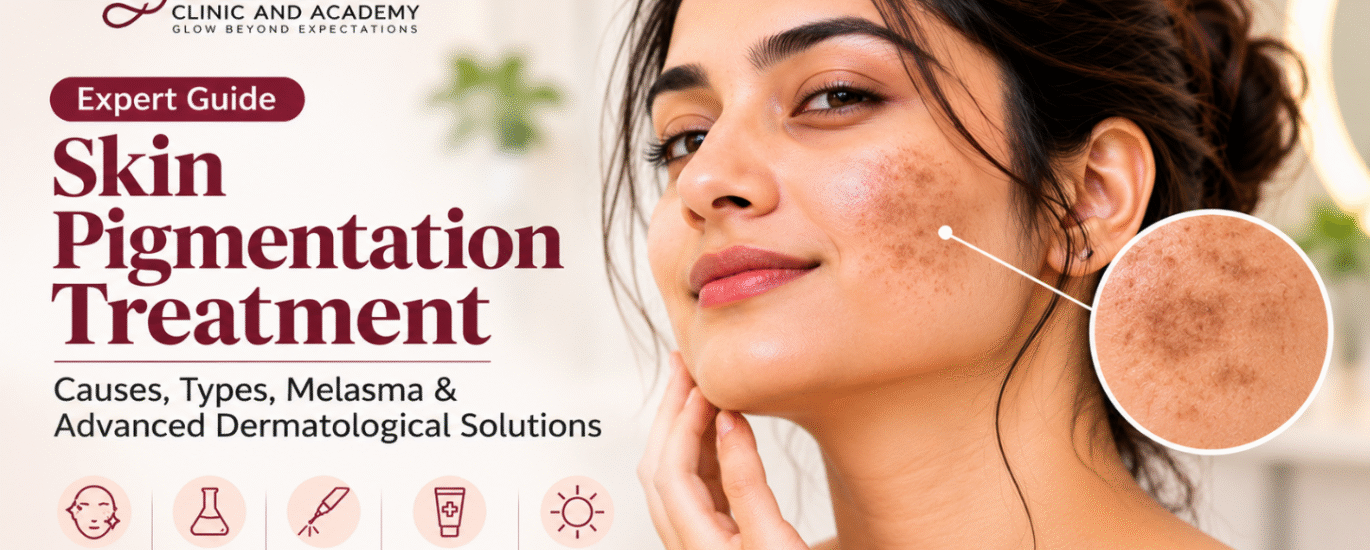
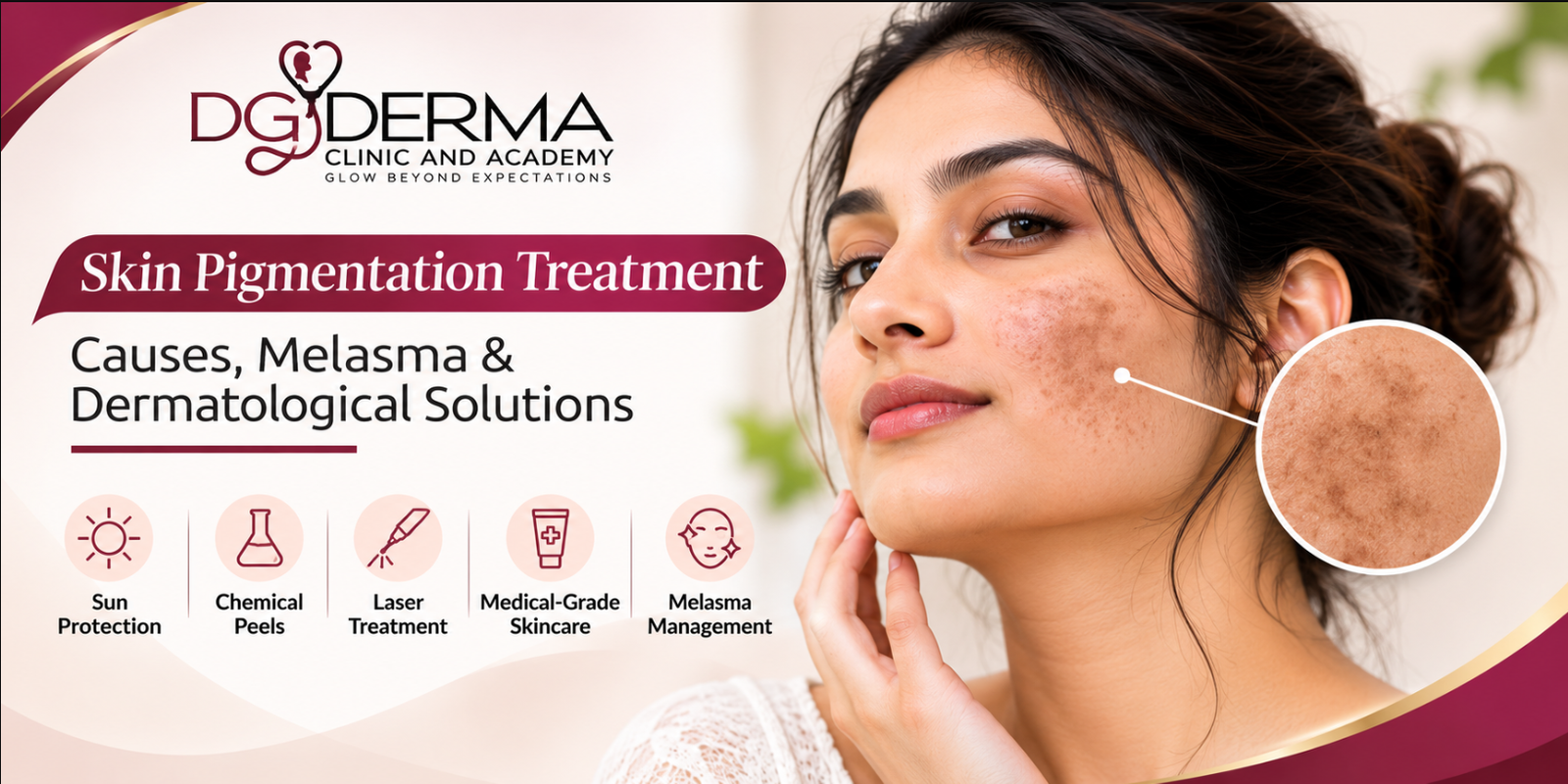
Skin Pigmentation Treatment: Causes, Types, Melasma & Advanced Dermatological Solutions
Uneven skin tone, dark spots and facial pigmentation are among the most common skin concerns affecting people of different ages and skin types. These changes may develop gradually due to sun exposure, hormonal fluctuations, inflammation, acne marks and other factors.
While some pigmentation concerns are temporary, others, such as melasma, may persist for years and require long-term management.
Modern dermatology offers several approaches to managing pigmentation, including dermatologist-prescribed topical treatments, chemical peels, laser procedures and customized skincare routines. The right approach depends on the underlying cause, depth of pigmentation and individual skin characteristics.
If you are looking for an effective skin pigmentation treatment, understanding the different types of pigmentation and their causes is an important first step.
At DGDERMA Clinic & Academy, the focus is on personalized dermatological care, professional skin assessment and treatment approaches designed around individual skin concerns.
What Is Skin Pigmentation?
Skin pigmentation refers to the natural colour of your skin, which is primarily influenced by a pigment called melanin.
Melanin is produced by specialized cells known as melanocytes. It helps protect the skin against the harmful effects of ultraviolet radiation.
However, when melanin production becomes excessive or unevenly distributed, darker patches or spots may develop on the skin. This condition is commonly known as hyperpigmentation.
Pigmentation can appear on different parts of the body, including:
- Forehead
- Cheeks
- Upper lip
- Nose
- Chin
- Neck
- Hands
- Arms
Facial pigmentation is particularly common because the face receives frequent exposure to sunlight and environmental factors.
What Causes Skin Pigmentation?
Several factors can contribute to excessive melanin production and uneven skin tone.
1. Sun Exposure
Excessive exposure to ultraviolet radiation is one of the major contributors to pigmentation.
When the skin is exposed to sunlight, melanocytes increase melanin production as part of the skin’s natural protective response.
Repeated sun exposure may contribute to dark spots, tanning, uneven skin tone and worsening of existing melasma.
2. Hormonal Changes
Hormonal fluctuations can influence melanin production and contribute to certain pigmentation conditions.
Melasma is frequently associated with hormonal factors, pregnancy and the use of hormonal medications, including some oral contraceptives.
3. Post-Inflammatory Hyperpigmentation
Post-inflammatory hyperpigmentation (PIH) develops after skin inflammation or injury.
It commonly appears following:
- Acne breakouts
- Pimples
- Eczema
- Skin irritation
- Certain cosmetic procedures
- Minor skin injuries
PIH may appear as brown, dark brown or greyish patches, depending on the depth of pigmentation and individual skin characteristics.
4. Ageing and Sun Damage
Long-term sun exposure can contribute to the development of age spots, also known as solar lentigines.
These spots commonly appear on areas exposed to sunlight, such as the face, hands, shoulders and arms.
5. Skin Irritation and Harsh Products
Using unsuitable skincare products, aggressive exfoliants or irritating ingredients can damage the skin barrier and trigger inflammation.
In individuals prone to pigmentation, this inflammation may lead to darker marks.
6. Genetic and Individual Skin Factors
Some individuals may have a greater tendency to develop pigmentation due to genetic factors and their skin’s response to inflammation, sunlight and hormonal changes.
Understanding these factors helps determine the most suitable treatment approach.
Different Types of Skin Pigmentation
Not all pigmentation conditions are the same. Identifying the type of pigmentation is essential before starting treatment.
1. Melasma
Melasma is a common pigmentation condition characterized by brown or grey-brown patches, usually appearing symmetrically on the face.
It commonly affects:
- Forehead
- Cheeks
- Upper lip
- Nose
- Chin
Melasma is associated with factors such as sunlight, hormonal changes, pregnancy and genetic predisposition.
It can be challenging to manage because pigmentation may return even after improvement.
2. Post-Inflammatory Hyperpigmentation (PIH)
PIH develops after inflammation or injury to the skin.
It is frequently associated with acne, eczema, skin irritation and certain cosmetic procedures.
These marks can gradually fade, but the time required depends on their depth, skin characteristics and ongoing triggers.
3. Solar Lentigines (Sun Spots)
Solar lentigines are flat brown spots that develop after prolonged exposure to ultraviolet radiation.
They are commonly seen on the face, hands and other sun-exposed areas.
A dermatologist can distinguish these spots from other pigmented lesions before recommending treatment.
4. Freckles
Freckles are small, flat, light-brown to dark-brown spots that are influenced by genetics and sunlight exposure.
They may become more noticeable after sun exposure and lighter during periods of reduced sunlight.
5. Periorbital Hyperpigmentation
Periorbital hyperpigmentation refers to darkening around the eyes.
It may be influenced by genetics, pigmentation, skin thickness, allergies, rubbing and lifestyle factors.
The appropriate management depends on the underlying cause.
What Is the Best Skin Pigmentation Treatment?
There is no single pigmentation treatment suitable for everyone.
A dermatologist considers the type of pigmentation, skin tone, depth of pigment, medical history and previous treatment response before recommending a suitable approach.
Some commonly used treatment options include:
1. Topical Treatments for Pigmentation
Topical skincare products and prescription medications are commonly used to manage different types of hyperpigmentation.
Depending on the condition, a dermatologist may recommend ingredients such as:
Vitamin C: An antioxidant ingredient that may help improve the appearance of uneven skin tone and protect against oxidative stress.
Azelaic Acid: An ingredient used to manage acne-related inflammation and certain pigmentation concerns.
Retinoids: These ingredients support skin cell turnover and may help improve certain forms of hyperpigmentation.
Kojic Acid: An ingredient used in selected pigmentation-focused skincare formulations to help reduce excess melanin production.
Hydroquinone: A prescription depigmenting agent used under medical supervision for certain pigmentation conditions, particularly melasma.
The selection, concentration and duration of topical treatments should be determined by a qualified professional.
Using multiple strong active ingredients without guidance can irritate the skin and potentially worsen pigmentation.
2. Chemical Peels for Pigmentation
Chemical peels are dermatological procedures that involve applying selected chemical solutions to the skin to promote controlled exfoliation.
Depending on the formulation and treatment depth, chemical peels may help improve:
- Superficial pigmentation
- Certain acne-related dark marks
- Uneven skin tone
- Sun-related pigmentation
- Skin texture
Common peeling agents include glycolic acid, salicylic acid and other professionally selected formulations.
The strength of the peel must be customized according to skin type and pigmentation characteristics.
Chemical peels are not suitable for every pigmentation condition. Improper treatment can cause irritation, burns and post-inflammatory hyperpigmentation.
3. Laser Treatment for Pigmentation
Laser-based procedures use selected wavelengths of light energy to target pigment in the skin.
Depending on the laser technology, these treatments may be considered for selected pigmentation concerns, including certain sun spots and persistent pigmented lesions.
Potential applications include:
- Selected sun-induced pigmentation
- Certain dark spots
- Some forms of superficial pigmentation
- Specific pigment-related skin concerns
However, laser treatment is not automatically the best option for melasma.
Melasma can be particularly challenging because laser procedures may sometimes trigger inflammation, worsen pigmentation or lead to recurrence.
A detailed skin assessment is important before considering any laser-based treatment.
4. Microneedling for Selected Pigmentation Concerns
Microneedling is a minimally invasive procedure that creates controlled micro-injuries in the skin using fine sterile needles.
It stimulates the skin’s natural healing response and may be considered for selected pigmentation and skin texture concerns.
However, microneedling must be performed carefully because excessive inflammation can worsen post-inflammatory pigmentation, particularly in darker skin tones.
Its suitability depends on the type of pigmentation and the treatment protocol.
5. Dermatologist-Guided Combination Treatment
Some pigmentation conditions may require a combination of approaches rather than a single procedure.
For example, a treatment plan may include:
- Daily sun protection
- Prescription topical medication
- Medical-grade skincare
- Carefully selected chemical peels
- Laser procedures in appropriate cases
Combination treatment should be planned according to the patient’s skin condition and response over time.
Melasma Treatment: Why Does It Require Special Attention?
Melasma is one of the more challenging forms of facial pigmentation.
Unlike certain superficial dark spots, melasma may involve deeper pigment deposition and can recur even after successful treatment.
Its management generally focuses on reducing excess pigmentation, controlling triggers and maintaining long-term sun protection.
Common Approaches to Melasma Management
Depending on individual assessment, a dermatologist may recommend:
- Broad-spectrum sunscreen and visible-light protection.
- Prescription depigmenting creams.
- Selected topical ingredients such as azelaic acid.
- Carefully selected chemical peels.
- Laser or light-based procedures in suitable cases.
It is important to understand that melasma does not always disappear permanently.
The objective is to control pigmentation, improve skin appearance and reduce the likelihood of recurrence.
Importance of Sunscreen in Pigmentation Treatment
Sunscreen is one of the most important components of managing pigmentation.
Without adequate sun protection, existing pigmentation may become darker and new pigmentation may develop.
Dermatologists commonly recommend:
- Broad-spectrum sunscreen with SPF 30 or higher.
- Regular application when exposed to sunlight.
- Reapplication approximately every two hours outdoors.
- Protective clothing and wide-brimmed hats.
- Seeking shade during intense sunlight.
For people dealing with melasma and pigmentation, tinted sunscreens containing iron oxides may provide additional protection against visible light.
Daily sun protection should continue even when pigmentation begins to improve.
How to Prevent Skin Pigmentation?
Although not every pigmentation condition can be prevented, several habits can help reduce the risk of worsening pigmentation.
1. Use Sunscreen Every Day
Apply a suitable broad-spectrum sunscreen as part of your daily skincare routine.
Do not limit sunscreen use to sunny days.
2. Avoid Picking Pimples
Picking or squeezing acne lesions can cause inflammation and increase the risk of post-inflammatory hyperpigmentation.
3. Choose Gentle Skincare Products
Avoid products that cause burning, excessive dryness or irritation.
A simple routine with a suitable cleanser, moisturizer and sunscreen can help support skin barrier health.
4. Avoid Unsupervised Skin-Lightening Treatments
Do not use strong bleaching creams, prescription steroids or depigmenting agents without professional advice.
Some products may cause skin thinning, irritation and other complications when used incorrectly.
5. Maintain a Consistent Skincare Routine
Changing skincare products too frequently can make it difficult to assess their effectiveness and may increase irritation.
Follow a routine suitable for your skin type and condition.
6. Seek Professional Advice for Persistent Pigmentation
If dark patches continue to spread, change appearance or fail to improve, seek a professional assessment.
Some pigmented lesions require examination to rule out conditions other than ordinary pigmentation.
Why Consider DGDERMA for Professional Skin Care?
DGDERMA Clinic & Academy, founded by Dr. Debanjoy Goswami, focuses on dermatological care, advanced aesthetic solutions and personalized skincare approaches.
The clinic’s listed areas of expertise include:
- General Dermatology
- Cosmetic Dermatology
- Laser Treatments
- Skin Rejuvenation
- Acne and Acne Scar Management
- Melasma and Pigmentation Concerns
- Personalized Skincare Counselling
The appropriate treatment depends on the individual’s skin condition, pigmentation type, skin tone and medical history.
Professional consultation helps determine whether topical treatments, chemical peels, laser-based procedures or a combination approach may be suitable.
Rather than selecting a procedure based only on advertisements, patients should understand its potential benefits, limitations, side effects and maintenance requirements.
DGDERMA Clinic & Academy
Location: 34/A, Bancharam Mitra Lane, Konnagar, Hooghly, West Bengal – 712235
Phone: +91 90380 58885
Website: https://dgderma.com/
Frequently Asked Questions About Skin Pigmentation Treatment
1. What is the best treatment for skin pigmentation?
The best treatment depends on the underlying cause. Options may include topical medications, chemical peels, selected laser procedures and dermatologist-guided skincare.
2. Can facial pigmentation be removed permanently?
Some pigmentation conditions can improve significantly, but complete permanent removal cannot be guaranteed. Melasma, in particular, may return even after successful treatment.
3. Is laser treatment effective for pigmentation?
Laser treatment can improve selected pigmentation conditions, including certain sun spots. However, it requires careful selection because some forms of pigmentation, especially melasma, may worsen after inappropriate laser treatment.
4. How long does pigmentation treatment take?
The duration depends on the type and depth of pigmentation, treatment method and individual skin response. Some superficial marks may improve over several months, while melasma may require longer-term management.
5. What causes melasma on the face?
Melasma is associated with several factors, including sunlight, hormonal changes, pregnancy, genetic predisposition and certain medications.
6. Does sunscreen help reduce pigmentation?
Yes. Regular use of broad-spectrum sunscreen helps prevent existing pigmentation from becoming darker and reduces the risk of developing additional sun-related pigmentation.
7. Can acne marks cause pigmentation?
Yes. Acne-related inflammation can lead to post-inflammatory hyperpigmentation, which commonly appears as brown or dark marks after breakouts heal.
8. Are chemical peels safe for pigmentation?
Chemical peels may help manage selected pigmentation concerns when performed appropriately. However, the peel strength and formulation must be selected according to skin type and condition.
9. Can pigmentation return after treatment?
Yes. Pigmentation, particularly melasma, may recur after improvement. Consistent sun protection and maintenance treatment are often important.
10. When should I consult a dermatologist for pigmentation?
Consider professional consultation if pigmentation persists, spreads, changes in appearance or does not respond to your existing skincare routine.
Final Thoughts
Skin pigmentation can develop for different reasons, and treating it effectively requires understanding its underlying cause.
Modern dermatology offers several approaches, including topical treatments, chemical peels, laser procedures and personalized skincare routines.
However, pigmentation management is not about using the strongest treatment or achieving overnight results. It requires appropriate diagnosis, careful treatment selection, consistent sun protection and realistic expectations.
Melasma and other persistent pigmentation conditions may require long-term care, making professional guidance particularly important.
If you are experiencing dark spots, uneven skin tone, melasma or persistent facial pigmentation, consider consulting a qualified dermatologist to understand the treatment options suitable for your skin.
Take the first step towards healthier-looking, more even-toned skin with a professional consultation at DGDERMA Clinic & Academy.
Visit https://dgderma.com/ or call +91 90380 58885 to enquire about an appointment.
Medical Disclaimer: This article is intended for educational purposes only and does not replace professional medical advice, diagnosis or treatment. Pigmentation treatments should be selected after an appropriate consultation with a qualified medical professional.
by. Dr. Debanjoy Goswami (CEO & Founder) DGCOSMETICO | DGDERMA CLINIC & ACADEMY